Dasmariñas, Cavite · Philippines
I check what’s false, and I know how to make the truth travel.
Student journalist at De La Salle University – Dasmariñas. I fact-check for a network of campus newsrooms across Asia, produce a radio programme on disinformation, research why local news is disappearing. I have also spent a decade managing Facebook audiences in the millions.
Audience
Reporting nobody sees isn’t reporting. I currently manage three Facebook pages with a combined audience of roughly 2.1 million, and I’ve been publishing on social platforms professionally since 2014.
That run has lasted because I rebuild the approach every time the distribution rules change. When platforms began suppressing outbound links, I stopped treating social as a traffic funnel and published the news natively, where the audience already was. When hard news and political content were pushed down the feed, I kept the audience engaged with other work rather than shouting into a dead channel, so when conditions changed again there was still an audience to bring back to hard news.
Most newsrooms treat distribution as something bolted on after the story is written. I’ve had to treat it as part of the job for over a decade.
What I can do on day one
- Run a newsroom’s social accounts without supervision
- Rework a story for each platform’s format and reach conditions
- Read a sudden traffic drop and say whether it’s the algorithm or the content
- Write headlines in Filipino or English that survive a feed
- Track performance in Google Analytics
Reporting
The 2025 midterm elections
I spent two months covering Cavite for Inquirer.net through the 2025 Philippine midterms, on its #INQVolunteer programme, working mostly out of General Trias City.
The work was live and deadline-bound: interviewing voters at the precinct, recording what was going wrong inside polling places, and verifying results material off candidates’ pages against Comelec partial counts as the returns came in. I filed from the field to the newsroom in Manila. My contributions ran on the paper’s election coverage credited as “via Russell Aguila.”
A counting machine that could not read a ballot
A 75-year-old voter at Governor Ferrer Memorial Integrated National High School told me he had been made to leave his filled-out ballot with a polling officer because the machine would not accept it. Around 10,000 reactions and 6,000 shares.
A voter refuses to hand over her ballot
A voter who could not locate her precinct, and who questioned why poll officers were noting her name and offering to feed her ballot into the machine. She declined. Around 2,000 reactions and 568 shares.
First voters arrive
Covering Comelec’s early voting window for senior citizens, persons with disabilities and pregnant women, from five in the morning.
Proclamations in Amadeo and General Trias
Sourced and verified proclamation material for the Amadeo mayoral result and the twelve incoming Sangguniang Panlungsod members in General Trias.
Verification
Building a campus fact-checking desk
ANNIE School Net is a campus fact-checking project run with 15 educational institutions across Asia, backed by the Asian Network of News and Information Educators and a Google News Initiative grant. The model works the way teaching hospitals do: students learn verification by doing it for real while they’re still studying. Green FM is DLSU-D’s newsroom for the project.
My contribution has been organisational as much as editorial. I drove many of the initiatives that keep the programme running, pushed classmates to write news and produce video, and I’m among the students who have written the most articles for it. I help coordinate more than 15 student fact-checkers.
Statistics on safety in Manila and Davao not credible
Viral infographics ranked Manila the most dangerous city in Southeast Asia and Davao among the safest, citing Numbeo. Rather than check the ranking, I checked the source: Numbeo’s own terms admit its data is user-submitted and unreviewed, a Swedish case showed the index could be manipulated outright, and AFP had already found it used for political propaganda. Rated false. Published in English and Filipino, and later cited by a fact-checking outfit in Pakistan.
Elon Musk did not praise Marcos over the Starlink project
A national tabloid reported that Musk had praised the administration’s satellite internet rollout. He had retweeted a Starlink post and said nothing. Rated false.
PNP generals did not file an impeachment complaint against VP Duterte
A viral photo of police officials circulated with a caption inventing a fifth impeachment complaint. Rated false.
DLSU-D at an international fact-checking conference
I was one of two students chosen to represent the Philippines at Fact-checking Odyssey: Evidence Unleashed at Van Lang University in Ho Chi Minh City, alongside fact-checkers from Malaysia, Vietnam, Hong Kong, India and Indonesia. I prepared our presentation, and afterwards wrote the report on it.
Radio
Fact-checked
A programme on DLSU-D’s official campus radio about disinformation in the Philippines. Seven episodes across two seasons.
I hosted, wrote, produced and booked all four episodes of the first season, broadcasting in Filipino. For the second season I stepped back from the microphone and ran it from behind, producing, writing, and booking student fact-checkers from India, Indonesia and Vietnam to compare how information disorder looks in their countries. What spreads, who spreads it, and why the same tactic lands differently depending on where you are.
The pilot episode examined how mainstream outlets and government agencies were citing Numbeo, a crowd-sourced database, as if it were official statistics. Other student fact-checkers have since cited that episode as a source in their own work.
Balitaktakan
A discussion programme. I set the topics we take on, run the scripting process, and keep the show on track through production.
Tutok Lasalyano
A campus news programme. I approve the writers’ pitches and edit their copy before it goes into the broadcast script. Sample episode linked.
Research
Circling one question: what happens to a community when its local newsroom closes, and what could realistically take its place.
Assessing the feasibility of a community-driven regional news platform as an oasis within the news desert of the Calabarzon region
An audit of all 71 registered titles in the region found 44 with a website or an active page, but most of them publishing legal notices, compliance advertisements and press releases rather than reporting. The desert is not an absence of outlets, nor any longer of websites. It is an absence of journalism inside outlets that look like newsrooms from the outside.
Reimagining the hyper-local newspaper business model in a digital age
Argues that the daily mass-market broadsheet is finished, but that the demand for verified local information has migrated rather than disappeared: a community paper can survive by narrowing to the hyperlocal beats national outlets ignore, cutting print to a premium weekly, and running daily exclusives on social.
Feasibility of publishing company mergers for newspaper survival
Reading Manila Bulletin’s audited disclosures, profit rose from ₱16.2M in 2024 to ₱52.2M in 2025 while circulation revenue kept falling, because the gain came from cutting newsprint, freight and utilities rather than from selling newspapers. Consolidation keeps the company alive, not the paper.
A mixed-method analysis of the fact-checking process of De La Salle University – Dasmariñas as an ANNIE School
My thesis, currently underway: how claims actually get verified inside a university programme: where the process holds, and where it stalls.
How I use AI in research
I use Gemini in my research, for scanning literature and for polishing drafts, and I’d rather be specific about that than leave it unsaid.
The rule I work by is the one I’d apply to any source whose credentials I couldn’t see: nothing a model tells me goes into a paper until I’ve found it myself. I read the underlying sources rather than the summary, and I check every figure and citation against the original. A language model is a lead, not a finding. That habit comes straight from fact-checking, and it’s why I’m comfortable saying out loud that I use these tools.
Building
digisalle.com
A student news and publishing platform for Digital and Multimedia Journalism students at DLSU-D. I’m its project co-head and webmaster: I built the foundation and took the site live so the rest of the team could add graphics and content on top. The visual design was theirs; the working site is mine.
Ten years before the degree
Content, news writing, research, and websites since 2014. I came into journalism school already knowing how a story gets made and shipped. This site is mine end to end. I keep my earlier professional work private for personal safety reasons, but I’m glad to walk through it in an interview.
Photos
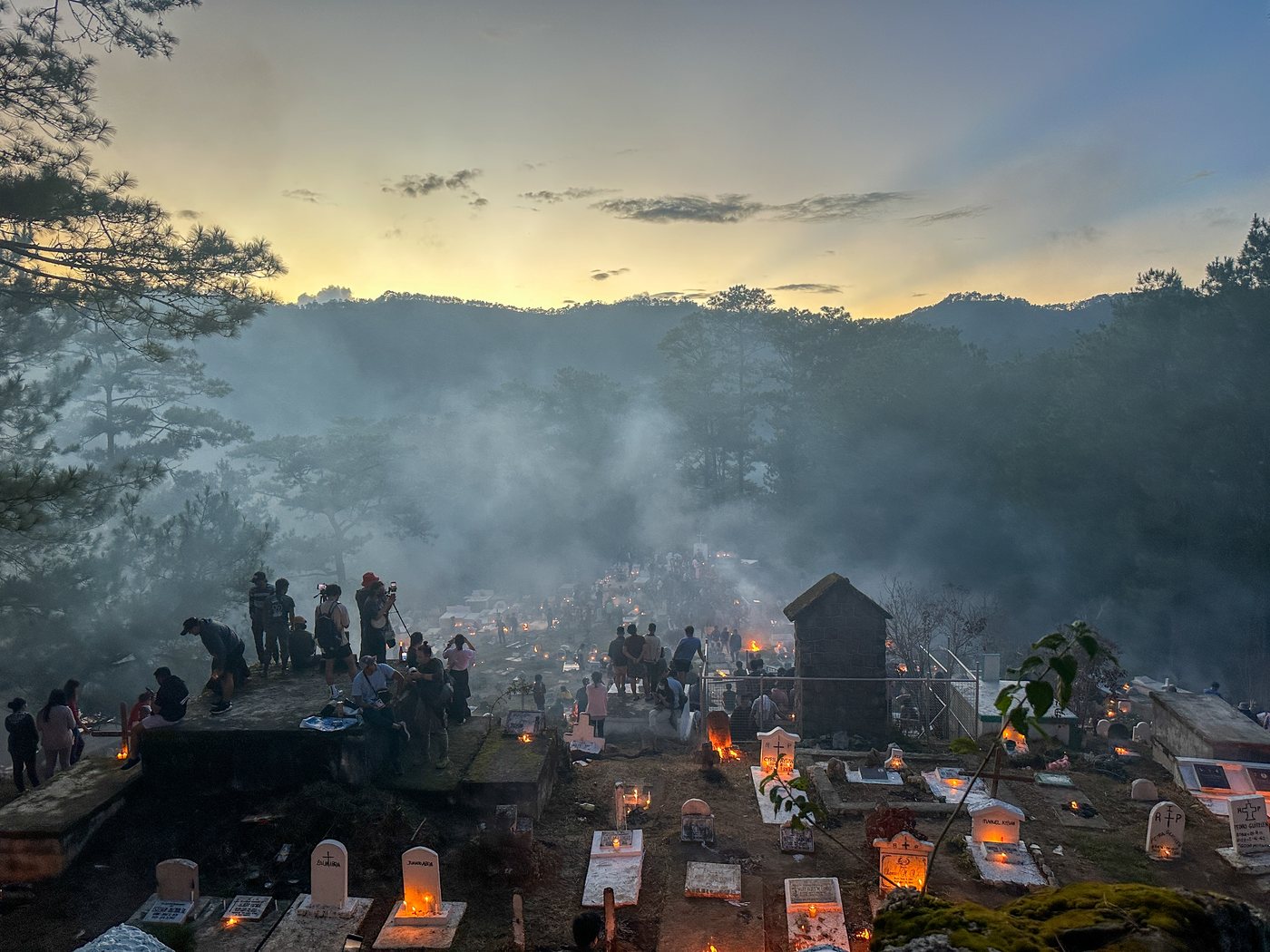
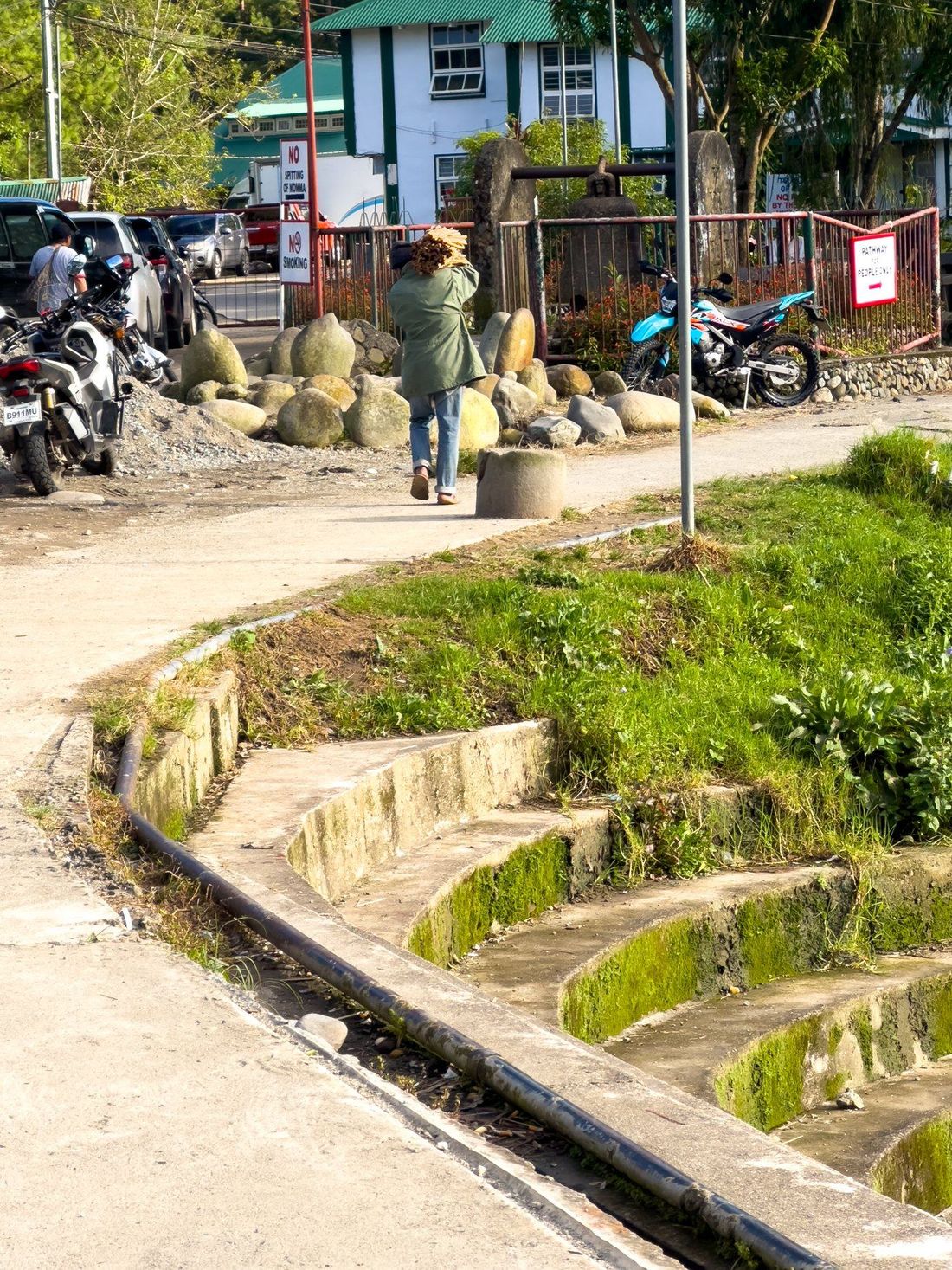
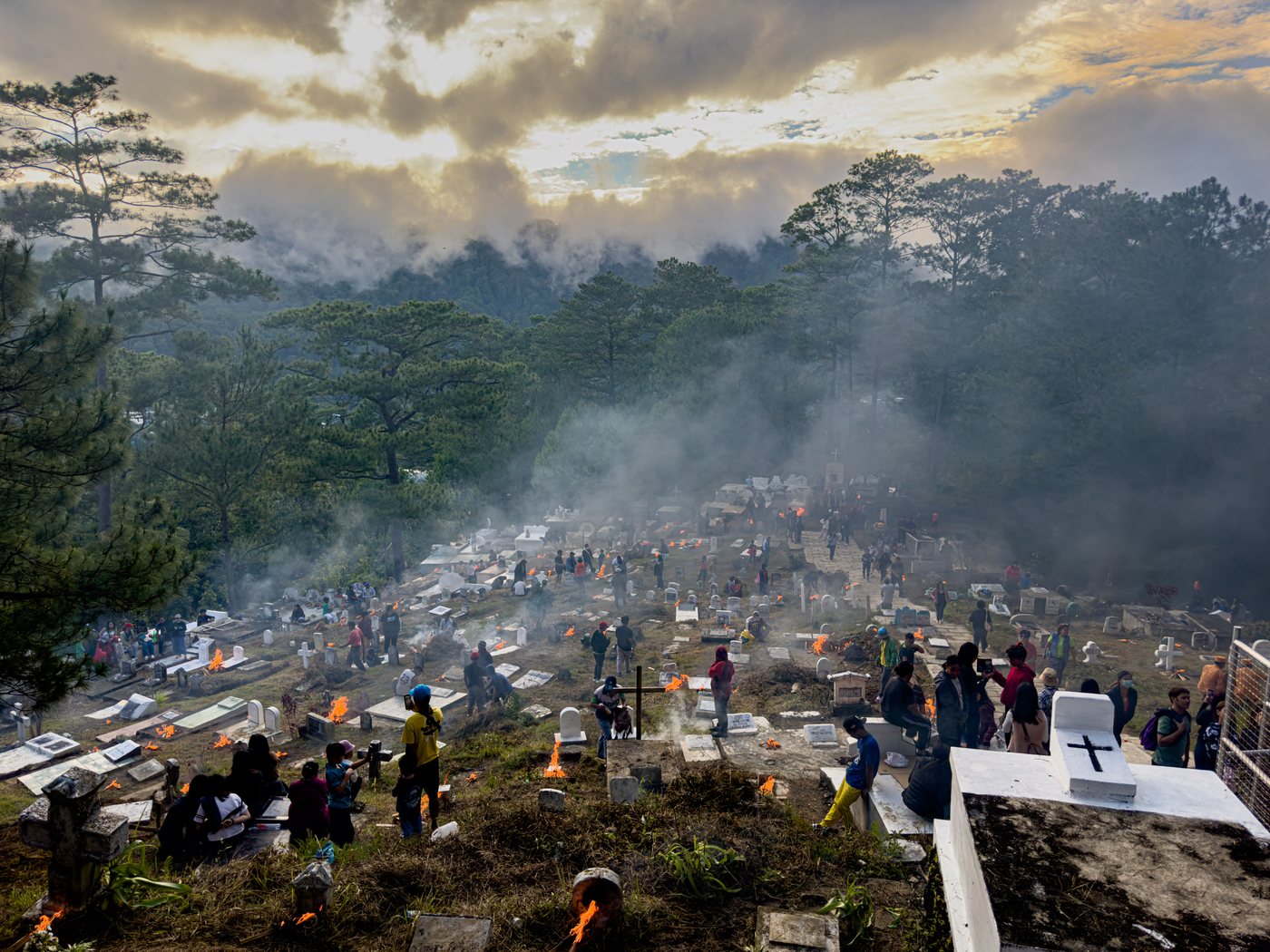
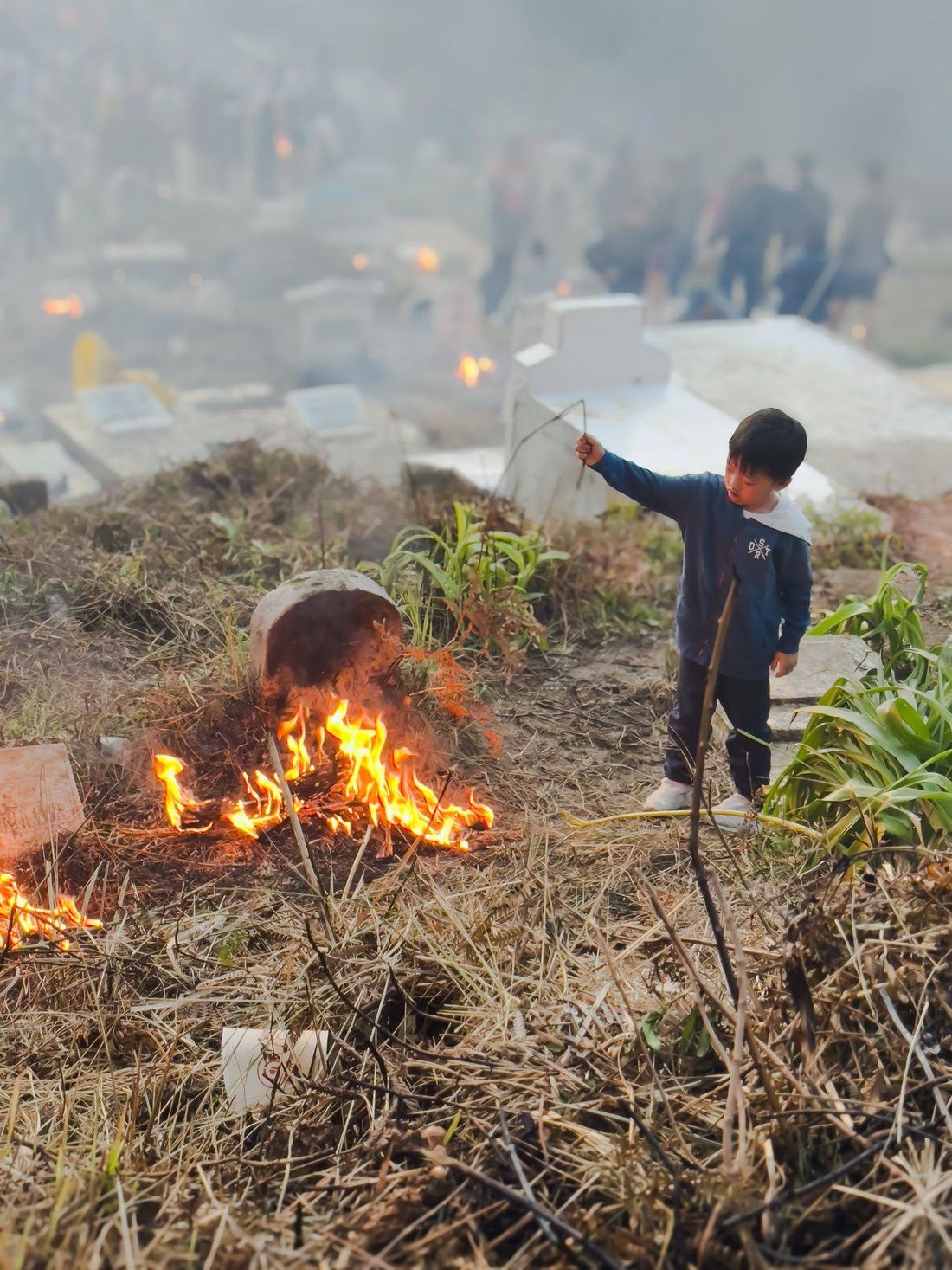
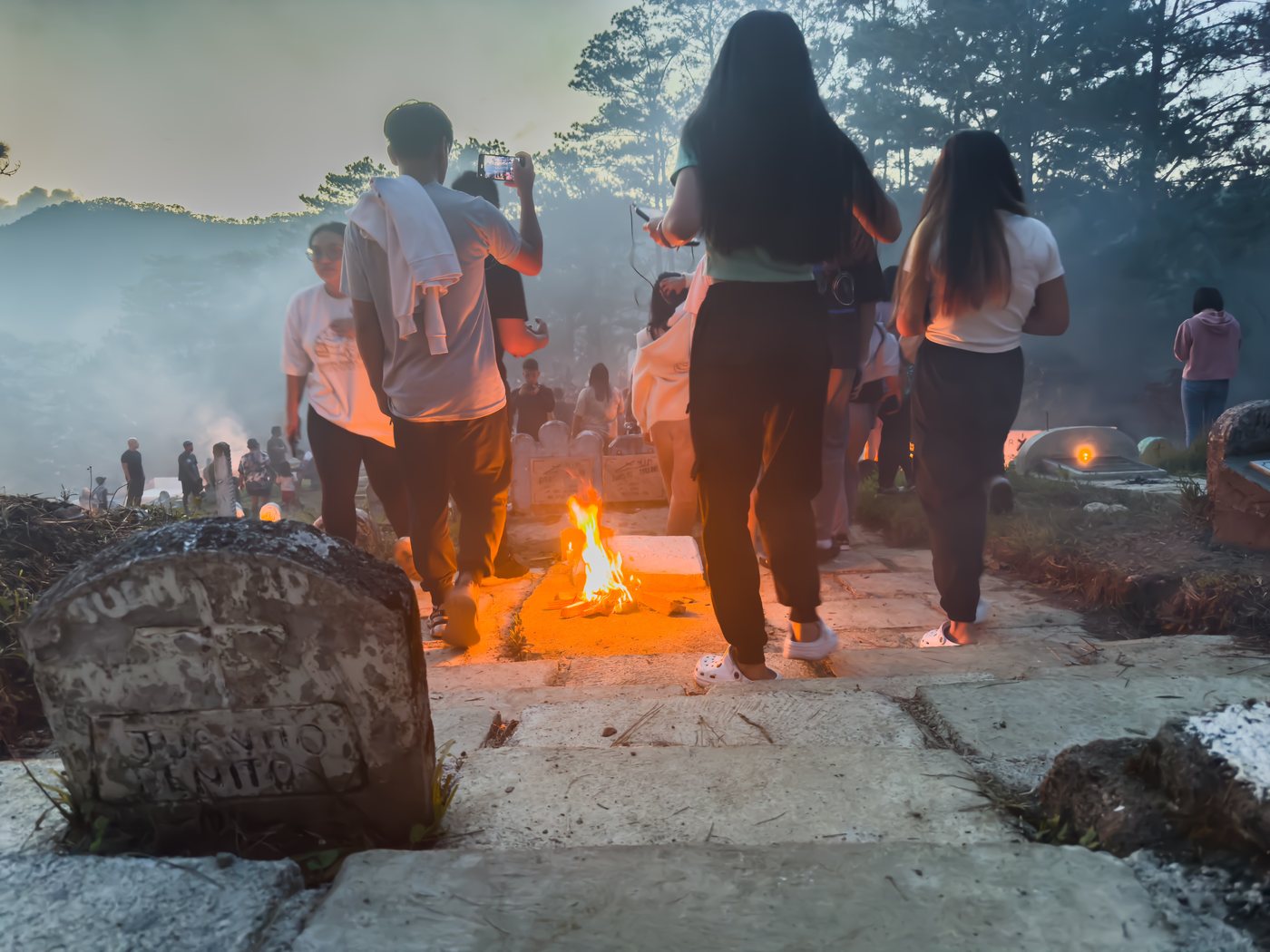
Panag-apoy, Sagada
On the first of November, families in Sagada climb to the cemetery at dusk and light bundles of pine on the graves of their dead. The whole hillside burns at once and the valley fills with resin smoke. Shot in 2024.
About
I’m a fourth-year digital multimedia journalism student at De La Salle University – Dasmariñas, and I’ll be looking for a practicum placement next semester. I’m also a working student, so I’ve been carrying this job and this degree at the same time for a while now.
What I’m good at: writing news, verifying claims, and running social accounts at scale. I shoot my own photos, and I can build and maintain the website the work lives on. I write and fact-check in both Filipino and English, and I broadcast in Filipino.
What I’m not: a video editor or a graphic designer. I can get by in CapCut and Canva when I have to, but if those are central to a role, I’m not the right hire, and I’d rather say so now than in week three.
I’d like to work somewhere doing verification, local or regional coverage, or serious experimentation with AI in editorial workflows. Mostly I want to learn from people who take this work seriously.

Get in touch
- Email: ARB1931@dlsud.edu.ph
- LinkedIn: russell-aguila
- Based in: Cavite, Philippines
- Languages: Filipino, English